Jun 17 2026 · 7 minute read
San Antonio Sump Pumps and Water Damage Restoration Tips
- How the pit, the pump, and the float work together
- Testing by pouring water into the pit
- Check valves and discharge lines
- Backup power when the primary pump cannot run
- Alarms and the decision to replace an aging pump
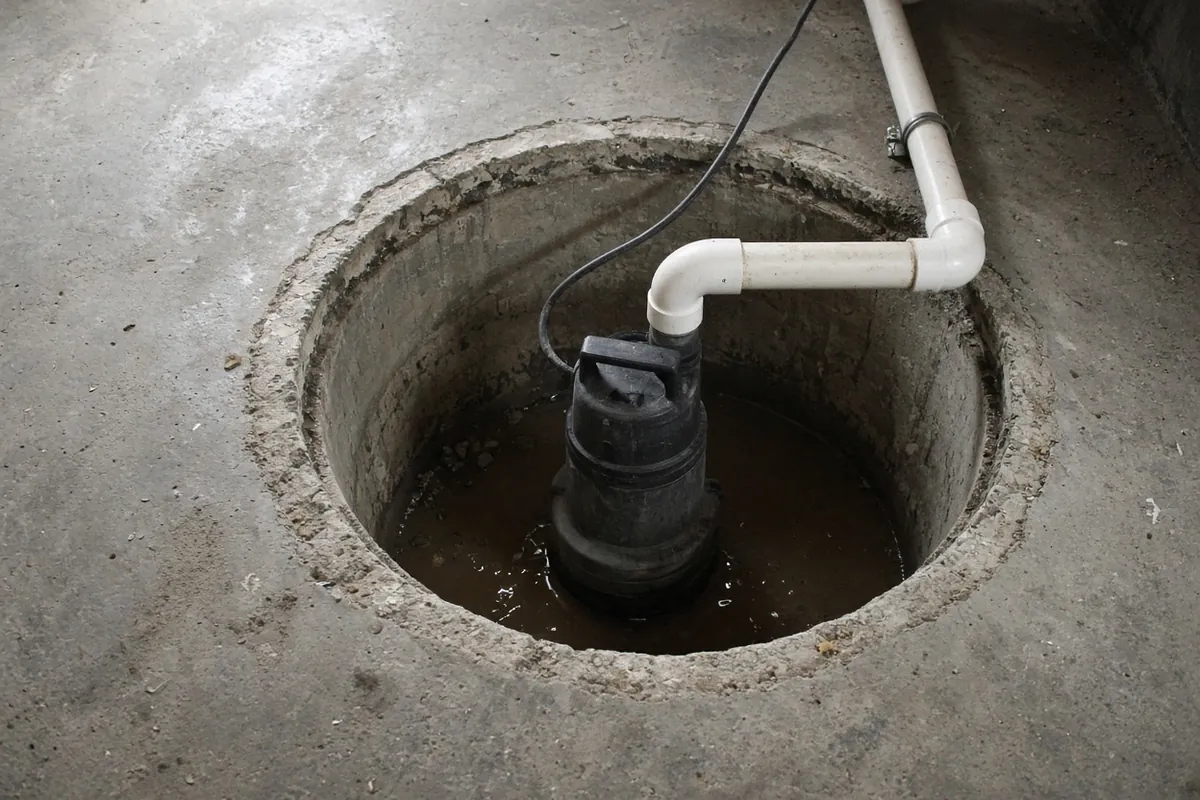
A sump pump is a small machine with a large job: it moves water out of a basement or crawl space before that water can spread across the floor. The system is simple enough that a homeowner can understand it, test it, and spot the failures that show up most often. Knowing those basics matters most during heavy rain, rapid snowmelt, or a power outage, when the pump is the last line between a dry lower level and a flooded one.
The heart of the setup is the sump pit, also called a sump basin. It is a lined hole, usually set into the lowest part of the floor, where groundwater and drain-tile water collect. A pump sits in that pit. When the water rises high enough, the pump turns on, pushes the water through a discharge pipe, and sends it outdoors or to another approved outlet. When the level drops, the pump shuts off. The cycle repeats whenever water returns.
How the pit, the pump, and the float work together
Most residential pumps are either pedestal or submersible. A pedestal pump keeps the motor above the pit and uses a shaft down to the impeller. A submersible pump sits in the water, which helps keep the motor cool and makes the unit quieter. Either style depends on a switch that senses water level.
The common switch is a float. A tethered float hangs in the pit and rises with the water until it tips and closes the circuit. A vertical float slides up a rod. Some newer pumps use a pressure sensor or an electronic switch instead of a moving float. The idea is the same: water reaches a set height, the pump starts, and it stops before the pit runs dry. A float that is tangled, stuck against the basin wall, or fouled with debris may never start the pump, or it may leave the pump running long after the pit is empty.
Homeowners can see the basic parts without special tools. The pit should be covered but accessible. The pump cord should reach a proper outlet without an extension cord lying on a damp floor. The discharge pipe should leave the basin, rise, and head outside. A clear view of the float, with room for it to move, is a good sign. Sludge, gravel, and stray toys in the pit are not.
Testing by pouring water into the pit
The most useful test is also the most direct. An owner pours water into the pit, slowly and steadily, until the float rises and the pump starts. Buckets from a laundry sink or a garden hose held so the stream does not blast the float out of position both work. The pump should turn on, empty the pit, and shut off. A second pour confirms that the cycle repeats.
During the test, residents should listen and look. A healthy pump starts cleanly, moves water, and stops. Grinding, rattling, or a motor that hums without pumping points to a jammed impeller, a bad switch, or a failing motor. If the float rises and nothing happens, the switch, the outlet, or the pump itself needs attention. Testing before storm season, and again after any work on the pit, catches those problems while the floor is still dry.
Pouring water tests the pump and switch. It does not prove that the whole house drainage system is sound. Floor drains, exterior grading, and gutter downspouts still matter. Independent building guides, including an Ecohome guide on basement flood prevention, sump pumps, and alarms, cover those same points along with backup power and pump upkeep.
Check valves and discharge lines
A check valve sits on the discharge pipe, usually just above the pump. It lets water leave and stops it from flowing back into the pit when the pump shuts off. Without it, the column of water in the pipe drops back down, the float rises again, and the pump short-cycles. That extra starting and stopping wears the motor and can overheat the unit. Owners can often hear the difference: a solid check valve closes with a distinct thud, while a failed one lets water rush back and triggers another start almost at once.
The discharge line is the path from that valve to daylight or to an approved drain. It needs a continuous slope or a route that does not trap water, and the outlet should be far enough from the foundation that water does not seep straight back toward the house. Two failures show up again and again.
- Freezing. In cold weather, water left in an exposed outdoor section can freeze. Ice blocks the pipe, the pump runs against a closed line, and the pit fills. Buried lines, insulated exposed sections, and outlets that drain fully reduce that risk. A frozen line is an emergency for the pump, not a problem that more runtime will solve.
- Clogging. Leaves, roots, sediment, and a crushed or disconnected outdoor pipe all stop flow. The pump may run, yet the pit never drops. Checking the outlet during a test, and keeping the end of the pipe visible and clear, reveals a clog before a storm does.
If the pump runs but little or no water leaves the outlet, the line or the check valve is the first place to look. Forcing the pump to keep working against a blockage can ruin it.
Backup power when the primary pump cannot run
Storms that fill a sump pit are the same storms that knock out electricity. A primary pump with no power is a silent pump. Two backup approaches are widely used in homes.
Battery backup pumps
A battery backup is a second pump, or a second controller on a DC pump, fed by a storage battery. When utility power fails, or when the primary pump cannot keep up, the backup starts. The battery is the limit. It only lasts as long as its charge and its condition allow, and a neglected battery may be dead when it is needed. Owners should keep the terminals clean, follow the charger’s status lights, and replace a battery that no longer holds a charge. A backup test, done the way the manufacturer describes, confirms that the second pump actually moves water.
Water-powered backup pumps
A water-powered backup uses household water pressure, not electricity, to create suction that lifts sump water out through its own discharge. It runs only while municipal pressure is available, so it does not depend on the electric grid. It does use a meaningful amount of city water for every minute it operates, and it needs enough pressure at the connection to work. Homes on wells, or homes with very low municipal pressure, may not be good candidates. Like any backup, it needs its own check valve arrangement so the two pumps do not fight each other, and it should be tested on a schedule.
Neither backup replaces a working primary pump. Each one covers a different failure: loss of power, or a primary pump that has quit. Some households install both a battery unit and a water-powered unit because the two fail for different reasons.
Alarms and the decision to replace an aging pump
An alarm is a separate float or sensor set higher than the normal pump-on level. If water reaches it, a loud beep warns residents that the primary system is behind. Battery-powered alarms still work during an outage, which is when a warning is most useful. An alarm that chirps for a low battery is asking for a new cell, not for the owner to pull the battery and forget it. People who travel, or who sleep far from the basement, sometimes add a remote or Wi-Fi alert, but a local horn that can be heard upstairs already solves the basic problem.
Pumps wear out. Sediment, constant runtime, short-cycling, and simply sitting in a damp pit for many seasons all age the motor, the switch, and the impeller. Manufacturers publish expected service life in their literature, and that guidance is a better source than a guess. Signs that replacement is wiser than another repair include a pump that trips its overload and restarts, a switch that works only when someone taps it, rusted housing, or repeated clogging from a damaged impeller. Replacing a weak pump before the wet season is calmer than replacing it while water is rising.
A short seasonal routine covers most of what a household can do. Pour water and confirm a full on-and-off cycle. Watch the check valve and the outdoor outlet. Clear the pit. Look at battery lights or test the water-powered unit. Confirm the alarm sounds. Note the pump’s age and how hard the last season worked it. That habit will not stop every flood, but it removes the quiet failures that turn a normal rain into a wet basement. If a pump does fail and water spreads across the floor, water extraction and drying may be needed to pull moisture from flooring and walls after the pit is working again.