Aug 05 2026 · 4 minute read
Water Damage Restoration After Hail in Colorado Springs
- Storms, hail, and where the water goes
- The Waldo Canyon burn scar and flash flood risk
- Basements, grading, and gutters
- Sump pumps
- After water enters a basement
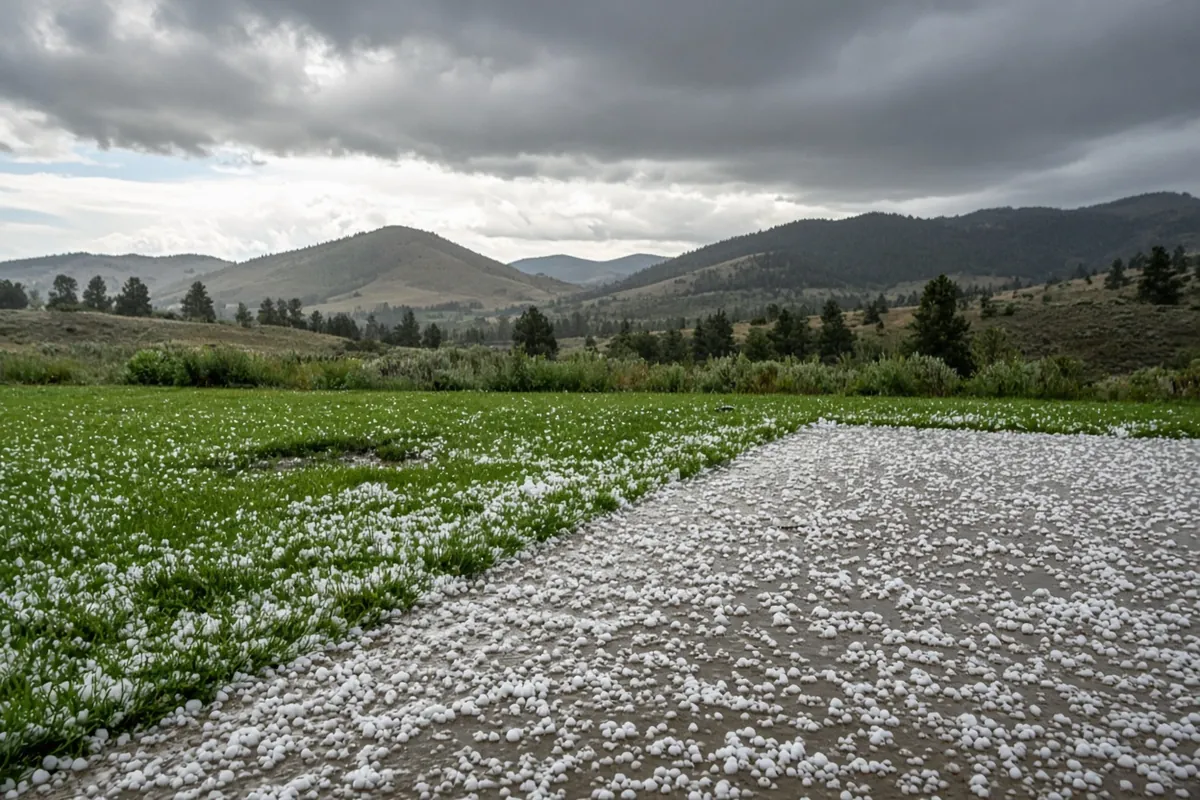
Summer afternoons along the Front Range often turn dark in a hurry. Colorado Springs sits where the high plains meet the mountains, and that setting favors fast thunderstorms from late spring through early fall. Residents know the pattern: sun, a towering cloud, then rain that can turn to hail within minutes. After the storm, the next concern is water. Hail clogs drains. Heavy rain overwhelms gutters. On slopes above town, burned hillsides shed runoff faster than they once did.
Storms, hail, and where the water goes
Thunderstorms in this part of Colorado commonly build over the mountains and drift east toward the city. One cell can soak a neighborhood and leave the next block nearly dry. Hail often comes with those cells. When it piles up in a gutter, a downspout, or a window well, rain that should leave the house has nowhere to go. Water spills over the gutter, splashes the foundation, or pools at a low corner of the yard.
Homeowners sometimes notice trouble only after a carpet feels damp or a musty smell rises from the basement. By then, water may have crossed a sill, seeped through a crack, or poured through a well that filled faster than it could drain. The first useful look is outside. A walk around the house shows whether downspouts sent water away from the foundation, whether window wells hold hail, and whether soil has washed toward the wall.
The Waldo Canyon burn scar and flash flood risk
In 2012 the Waldo Canyon Fire burned forest and neighborhoods on the west side of Colorado Springs. It is widely remembered as one of the most destructive wildfires in Colorado history. The fire moved out of the canyon country and into the Mountain Shadows area, and it left a large burn scar on the slopes above the city and above Manitou Springs.
A burn scar changes how a hillside handles rain. Trees, shrubs, and ground cover that once slowed runoff are gone or thin. Intense heat can also make soil slower to absorb water, so rain runs across the surface instead of soaking in. On steep ground, that runoff can pick up ash, rock, and branches and move as a debris flow. A drainage that handled an ordinary storm can rise quickly after a fire.
Summer thunderstorms therefore carry extra weight for Manitou Springs and for parts of the west side below the Waldo Canyon burn scar. A storm that looks routine on the plains can send a sudden pulse of water down a canyon or a neighborhood channel. A warning about heavy rain on the scar is a reason to stay out of low crossings, move cars if local safety officials advise it, and think about basement doors and window wells before the rain arrives. Vegetation returns over time, yet steep burned ground can still shed water faster than a fully forested slope. Owners below that scar treat drainage as a standing chore.
Basements, grading, and gutters
Most leaks start where soil meets the foundation. Window wells are a common entry point. They let light reach a basement window, and they also act as bowls. Hail, leaves, and dirt settle in the bottom. If the drain is blocked, a short cloudburst can fill the well to the window. Once water reaches the frame, it looks for a gap.
Soil should slope away from the foundation so rain moves off the house. Over years, soil settles, mulch builds up, and a slope can flatten or tip back toward the wall. A low spot beside a downspout is enough to feed a leak. Owners can correct a small grade problem with added soil, kept below the siding so it does not trap moisture against wood.
Gutters should be clear before storm season and again after hail knocks leaves and twigs into the trough. Downspouts should end several feet from the foundation, or connect to a drain that is known to be open. A loose elbow hidden in a shrub is a frequent reason a basement takes on water only on the weather side of the house.
Sump pumps
Many homes rely on a sump pump where groundwater or seepage shows up in wet weather. The pump sits in a pit and lifts water out of the basement. It helps only if it runs. Before thunderstorm season, owners pour water into the pit until the float lifts, then confirm that water leaves through the discharge line and does not soak the soil against the foundation. A thunderstorm can cut power just when the pump is needed. If the discharge line is crushed, clogged, or pointed back at the house, the pump moves the same water in a circle.
After water enters a basement
Safety comes before cleanup. Residents stay out of a flooded room if water may be touching outlets, appliances, or the electrical panel. When power can be shut off from a dry location, that step lowers the chance of shock. Furnaces, water heaters, and other gas appliances that sat in water need a qualified technician before a restart.
Standing water should come out as soon as removal is safe. Pumps, wet vacuums, and mops all help, starting with the deepest water. Carpet pad, soaked drywall, and wet insulation hold moisture and often have to come out. Hard surfaces can be washed and then dried. Fans and dehumidifiers should run long enough to dry cavities, not just the surface. A musty smell after the floor looks dry usually means moisture remains in a wall or under a floor covering.
Homeowners who want help pulling water, drying the structure, and checking hidden moisture can start with https://www.coloradospringswaterdamagerestoration.org/ and ask how the team handles basements after a Front Range storm.
Summer weather is part of life on the Front Range. Hail, a fast rain, and runoff from the 2012 burn scar are familiar risks. They stay manageable when drainage is maintained and a wet basement is dried without delay. The Insurance Information Institute's spotlight on flood insurance is a useful reminder that a standard homeowners policy and a flood policy answer different questions after a basement takes on storm water.