Sep 23 2026 · 6 minute read
Burst Pipes and Water Damage Restoration in Fort Worth
- Why North Texas plumbing is exposed
- Protecting outdoor fixtures before the cold arrives
- Attic lines and the rest of the house
- When a pipe has already burst
- A short plan for the next freeze
Fort Worth winters are usually mild enough that a hard freeze feels like an interruption rather than a season. Many homes were built with that climate in mind. Supply lines often run through attics, crawl spaces, and exterior walls, where they stay out of the way in ordinary weather and sit close to cold air when a freeze arrives. Residents who have never dealt with a burst pipe can still prepare in a single afternoon, and the same habits that protect a house in a brief cold snap matter even more when temperatures stay below freezing for days.
Why North Texas plumbing is exposed
In colder parts of the country, builders routinely place water lines in interior walls and insulate them as a matter of course. In North Texas, deep freezes are uncommon enough that many older and even newer houses leave pipes where heat from living spaces does not reach them. An attic can drop close to the outdoor temperature overnight. A wall on the north side of a house, or a garage wall with a laundry connection, can do the same. Irrigation lines and hose bibs sit fully outdoors. When still water inside those pipes turns to ice, it expands. The pipe, the fitting, or a weak joint gives way. The leak often stays hidden until the ice thaws and water starts moving again.
Winter Storm Uri, in February 2021, showed how quickly that sequence can spread across the region. Prolonged cold, power loss, and houses that lost heat combined to burst pipes in homes throughout North Texas, including Fort Worth. Owners returned to ceilings, walls, and floors soaked by lines they rarely thought about. The storm was unusual. The building pattern it exposed is ordinary.
Protecting outdoor fixtures before the cold arrives
Outdoor plumbing is the simplest place to start because it is visible and within reach.
Hose bibs
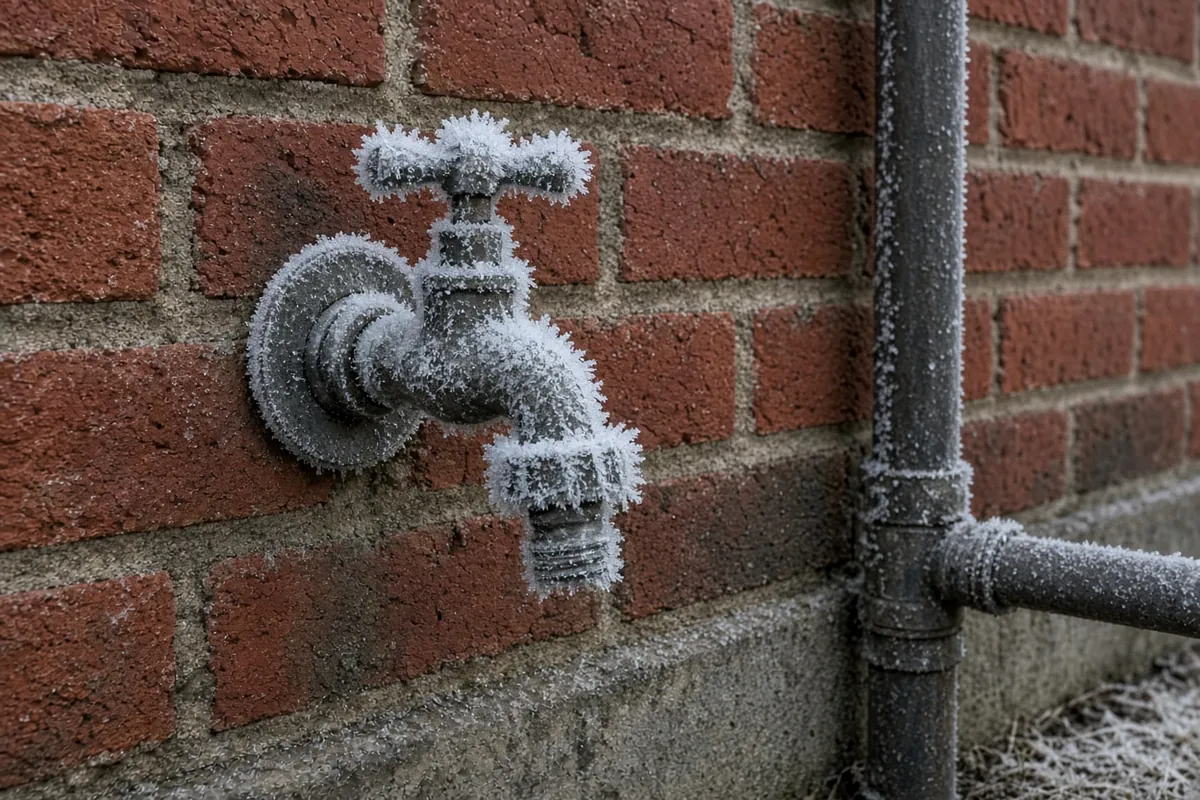
Homeowners should disconnect garden hoses from every outdoor faucet. A hose left attached traps water in the bib and in the short pipe behind the wall, which is a common place for a split. After the hose is off, owners of frost-proof sillcocks still benefit from an insulated cover. A foam bib cover costs little and slows heat loss from the pipe stub inside the wall. If the faucet has an interior shutoff, closing that valve and opening the outdoor handle to drain the line is stronger protection than a cover alone. State Farm publishes ideas on how to help prevent pipes from freezing, including disconnecting hoses and letting a vulnerable faucet drip during a hard freeze.
Irrigation and backflow preventers
Sprinkler systems hold water above ground in valves, vacuum breakers, and backflow preventers. Those brass assemblies crack when water freezes inside them. Residents should shut off the irrigation supply, drain the system according to the manufacturer's instructions, and wrap the backflow preventer with insulation and a waterproof cover. A towel under a plastic bag is a poor substitute for a proper cover, because the wrap needs to shed rain while holding insulation against the metal. Leaving the system charged through a forecast hard freeze is a frequent cause of spring leaks that show up only when the controller runs again.
Attic lines and the rest of the house
Attic supply lines deserve the same attention as outdoor fixtures, even though they are harder to see. Where pipes are exposed, foam pipe insulation helps, especially on runs near roof vents, soffits, and uninsulated gable ends. Insulation slows heat loss. It does not create heat. If the attic air stays below freezing for a long stretch, and no warm air reaches the pipe, insulation alone may not be enough. Owners who can safely do so should look for lines that touch the roof deck or sit in a draft and add insulation there first.
Inside the living space, a few habits reduce the chance that still water freezes in exterior walls.
- During a hard freeze, homeowners can leave a faucet that draws from vulnerable lines dripping slightly. Moving water is slower to freeze than a full, closed pipe. A thin stream is enough. A wide-open tap wastes water without adding much protection.
- Cabinet doors under sinks on exterior walls should stay open so room heat reaches the pipes. Towels or stored items blocking the opening undo that step.
- Interior doors can stay open so heat circulates into bathrooms, laundry rooms, and other spots with plumbing on an outside wall.
- Thermostat setbacks that are sensible on a mild night work against the house when the forecast calls for a deep freeze. Keeping the heat steady matters more than saving a little fuel for a day or two.
- If the power goes out, residents should limit how often exterior doors open and close, and they should know where to shut the water off if heat will be gone for many hours.
Every adult in the household should know the main shutoff. In many Fort Worth houses it is near the water meter, at the street side of the property, or where the service line enters a garage or utility room. A valve that has not been turned in years may be stiff. Finding it on a calm day, and confirming that it actually stops the flow, is more useful than searching for it while water is coming through a ceiling. A meter key for a buried curb stop is worth keeping in a known drawer.
When a pipe has already burst
A burst pipe is a plumbing problem and a building problem at the same time. The first priority is to stop the water. Closing the main shutoff does that for the whole house. If the break is on a single fixture line with its own valve, that valve is enough, and the rest of the house can keep its supply. After the water is off, someone should shut off electricity to any area where water may reach outlets, appliances, or the electrical panel. Standing in wet rooms and flipping breakers is unsafe. If the panel itself is wet, residents should leave it alone and call an electrician.
Next comes the water already in the house. Ceiling drywall can hold a surprising amount and then fail all at once, so people should stay out from under bulging ceilings. Moving furniture, lifting rugs, and blotting standing water with towels limits how far moisture travels into subfloors, baseboards, and wall cavities. Wet drywall, insulation, and carpet padding hold water after the surface looks dry. That hidden moisture is why speed matters. Porous building materials that stay damp become a place for mold, odors, and softened finishes. Homeowners who cannot dry cavities, cabinets, and flooring the same day often need an emergency drying service with air movers and dehumidifiers, plus a plumber to repair the line before the water is turned back on.
Photos of the damage, taken before cleanup removes the evidence, help with insurance conversations. Owners should also avoid running the heat at a very high setting to "bake" the house. Warm, humid air can drive moisture into cool materials and spread the problem. Controlled drying, with moisture leaving the building rather than moving from one room to another, is the sounder path.
A short plan for the next freeze
Fort Worth will see many winters with little more than a light frost. The houses that come through the next hard freeze in good shape are usually the ones whose owners treated a rare event as a known drill. Disconnect hoses, cover bibs, drain and wrap the irrigation backflow preventer, insulate attic lines that cold air can reach, open sink cabinets, set a slow drip on vulnerable faucets, and keep the main shutoff familiar. If a pipe still fails, stopping the water and drying the structure quickly protects far more than the broken fitting. Those steps are ordinary home care, and they are enough for most freezes this city is likely to see.